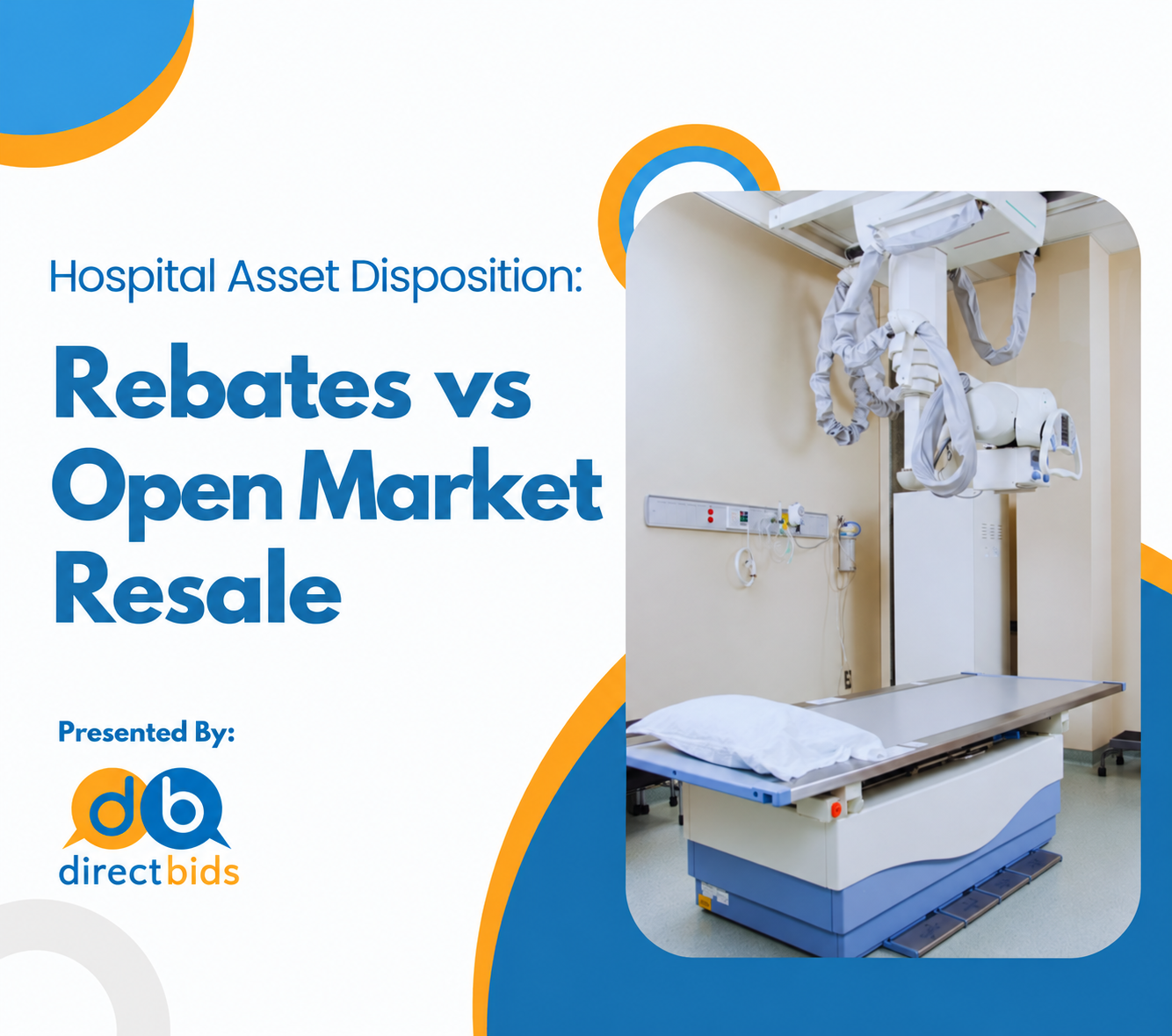
How Hospitals, Universities, and Institutions Recover Value from Surplus Equipment Institutions Recover Value from Surplus Equipment
Hospitals upgrade imaging systems. Universities replace lab equipment. Public agencies rotate fleet vehicles and IT hardware.
But what happens to the old assets?
That process is called asset disposition, and for large institutions, it is a critical, and often overlooked, financial function.
What Is Asset Disposition?
Asset disposition is the structured process of selling, redeploying, or responsibly disposing of surplus and retired equipment.
In hospitals, universities, and public sector organizations, this commonly includes:
- Medical and laboratory equipment
- IT hardware and electronics
- Vehicles and fleet assets
- Industrial tools and machinery
- Furniture and fixtures
Instead of scrapping or informally reallocating these assets, institutions can convert them back into working capital.
Why It Matters for Large Institutions
Asset disposition impacts four key areas:
1. Financial Recovery
Surplus equipment has real resale value. Competitive online marketplaces often produce higher recovery than manufacturer trade ins or private broker deals.
2. Compliance and Transparency
Public and healthcare institutions face strict requirements around equipment resale regulations, data security, audit documentation, and public transparency.
A structured process reduces legal ambiguity and protects the organization.
3. Space Optimization
Idle equipment takes up valuable clinical, research, and storage space. Faster removal improves operational efficiency.
4. Risk Reduction
Without a centralized system, assets can be lost, undervalued, or selectively sold. Formal disposition prevents cherry picking and internal inconsistencies.
Historic Approaches to Asset Disposition
Historically, institutions have relied on a mix of informal and fragmented methods:
Manufacturer Buybacks: Convenient, but often below open market value.
Local Auctioneers or Brokers: Limited geographic reach and smaller buyer pools.
Donations: Assets are donated to nonprofits or international organizations. While mission aligned, this approach often lacks valuation transparency and structured oversight.
Recycling or Scrap: Equipment is dismantled or disposed of with little to no value recovery, often used when no clear resale pathway exists.
While each of these methods serves a purpose, they are typically decentralized, inconsistent, and difficult to govern at scale.
The Strategic Shift
Historically, asset disposition has been reactive and decentralized, handled department by department.
Forward thinking institutions are centralizing the process to:
- Standardize approval workflows
- Increase recovery value
- Improve reporting transparency
- Reduce internal administrative burden
- Integrate disposition into the full asset lifecycle
Asset disposition is not just about removing old equipment.
It is about recovering capital, protecting compliance, and operating more efficiently.
What Separates DirectBids from Traditional Asset Disposition Providers?
Unlike traditional auctioneers that specialize in narrow asset categories, or brokers that quietly place equipment with limited buyer pools, DirectBids operates a centralized, open market online auction platform designed specifically for large institutions.
DirectBids allows institutions to actively govern the disposition process by implementing policy enforcement, centralized approvals, standardized workflows, and strategic planning across departments and facilities. Rather than relying on fragmented decisions at the department level, organizations can control how assets are evaluated, approved, listed, sold, and reported.
By managing all asset categories under one system, providing transparent reporting, supporting regulatory compliance, and exposing surplus equipment to a broad competitive buyer base, DirectBids delivers higher recovery value, faster removal, and reduced internal burden.
For hospitals, universities, and public agencies looking to treat asset disposition as a governed, strategic function rather than an afterthought, that difference matters.


.png?width=1900&height=1080&name=Why%20Surplus%20Asset%20Disposition%20Is%20Becoming%20a%20Governance%20Issue%20(9).png)